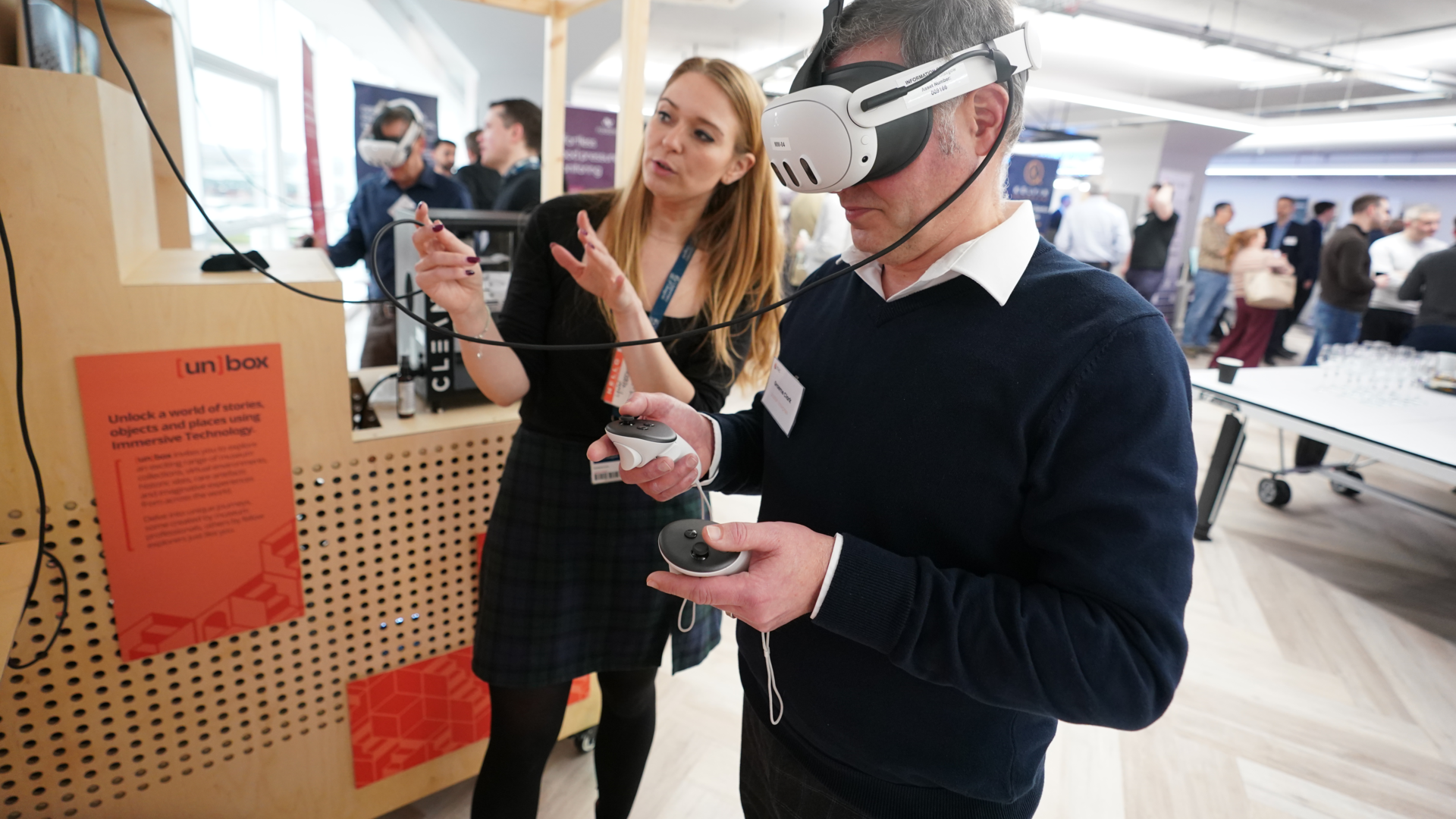
University celebrates Infinity G graduation
Fourteen startups with potential to change lives and create economic impact have benefitted from a venture-building programme in Glasgow.
A raft of young companies developing technology from wearable diagnostic brain sensors to medtech implants completed the University of Glasgow’s 13-week Infinity G accelerator programme that took place at thebeyond workspace in Finnieston.
The intensive programme – in only its second year - mixed tutoring and brand-building with expert mentorship, funding and resources to empower ventures across multiple disciplines to make a global impact.
Entrepreneurial
The cohort included three student projects and reflects the increasing levels of entrepreneurial activity coming from across all parts of the University - in areas from medical and quantum technologies to AI and virtual reality.
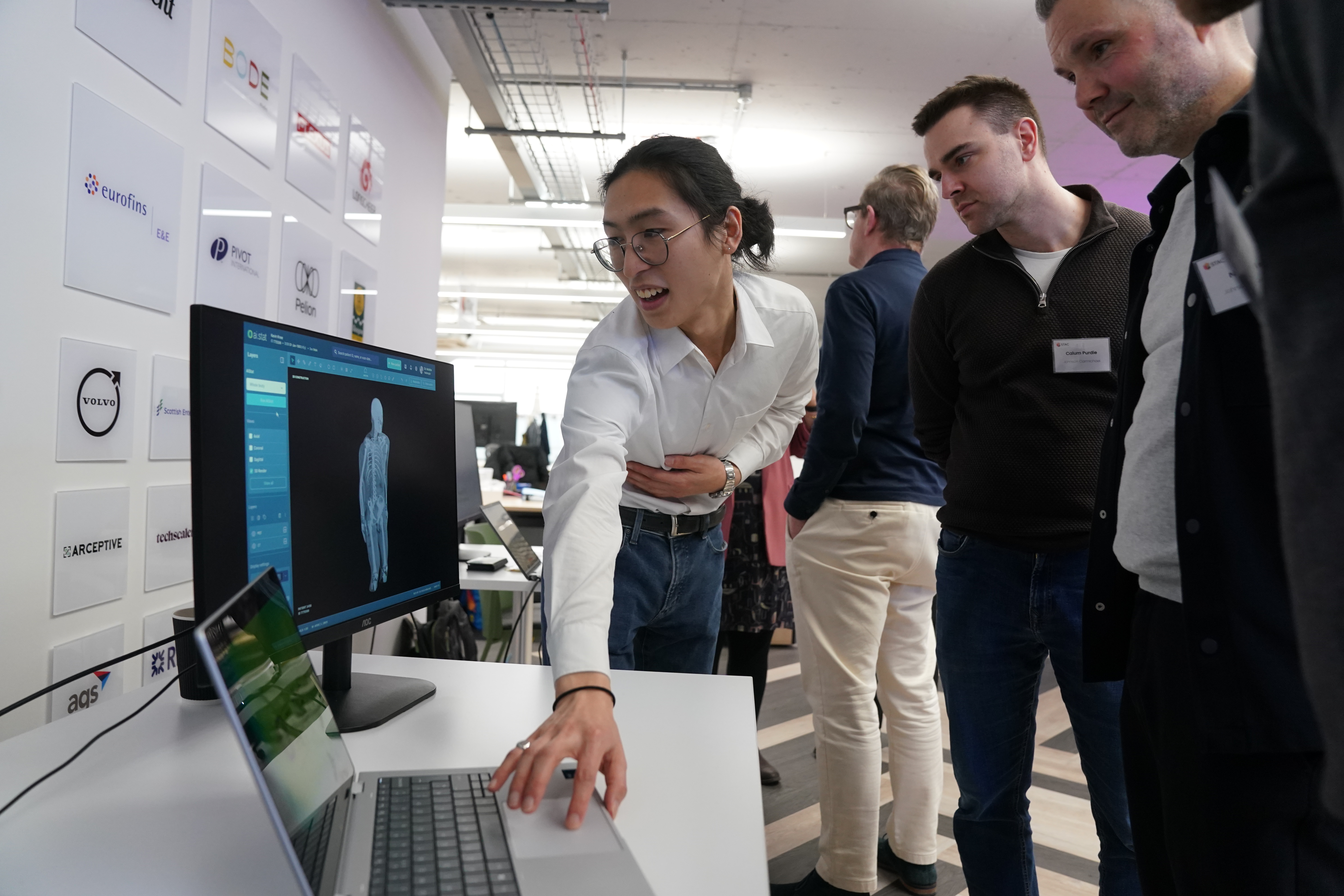
Kelvin Quantum is a University of Glasgow spin-out company that has developed specialised, high-performance electronics and integrated circuits designed to operate at cryogenic temperatures in quantum computing systems.
Robert Graham, CEO at Kelvin Quantum, said: "The programme helped us turn a highly technical, academic-focused story into something clear, direct, and accessible - so we can explain it easily to anyone, from investors to the general public.”
Rooted in world leading science from the University of Glasgow and Cancer Research UK, health tech startup TileBio is using artificial intelligence to revolutionise cancer diagnostics and digital pathology, by creating an “AI-learned visual language of tissue” through millions of medical images that enables automated systems to understand and interpret complex pathological data with unprecedented accuracy.
Chris Walsh, co-founder, CEO and CTO at TileBio, said: “The Infinity G programme helped us refine our brand, sharpen our value proposition, and develop strong pitch decks and a clearer website.
“As a computing scientist with no business background, I found the programme exceptionally well-structured and eye-opening, and I’d highly recommend it to anyone looking to commercialise their ideas or research.”
Ventures were selected for the quality of their propositions, the drive and ambition of the entrepreneurial leads and the potential impact of the innovative technology across sectors.
Infinity G is funded by the University of Glasgow and the UK Government Shared Prosperity Funding, administered by Glasgow City Council, and is part of a suite of innovation and enterprise initiatives led by the University to accelerate value from innovation emerging from the University and its regional partners.
Infinity G is designed to give founders the confidence, skills and networks they need to accelerate that journey and it has been inspiring to see how each venture has evolved over just 13 weeks.
Uzma Khan
The University’s programme is delivered in collaboration with the advanced technology accelerator STAC at its hub within Skypark and the Glasgow Riverside Innovation District.
Sessions included workshops on the importance of building a brand, strategic hiring, creating core IP and attracting investment or industrial interest, with presentations by outside speakers who offered a behind-the-scenes look at how venture capital funds operate and what investors look for.
Regular pitching and feedback sessions, both with the STAC team and external stakeholders, helped founders strengthen their narratives and accelerate the transition from research to sales.
The programme culminated in a final demo day and product showcase, when the ventures presented their businesses to active investors and industry and successfully demonstrated their transformation over the course of the programme.
Uzma Khan, Vice Principal, Economic Development and Innovation, University of Glasgow, said: “The Infinity G cohorts are a powerful demonstration of the depth, diversity and ambition of entrepreneurial talent emerging from across the University of Glasgow.
'Translate'
“From student-led ideas to spin-outs rooted in world-leading research, this cohort shows how innovation can translate into real-world impact – improving lives, creating economic value and addressing global challenges.
“Infinity G is designed to give founders the confidence, skills and networks they need to accelerate that journey and it has been inspiring to see how each venture has evolved over just 13 weeks."
Paul Wilson, CEO, STAC, said: “Infinity G's foundational mission has always been to translate rich scientific breakthroughs from the University into global impact. Glasgow is rapidly building momentum in commercialising highly-competitive technologies with the potential to improve lives and protect the planet.
“It is a genuine honour to collaborate with such brilliant minds. STAC is dedicated to accelerating these ventures, urging everyone involved to adopt an ambitious, fast-paced and globally-minded perspective, grounded in the belief that making a worldwide impact is achievable.”
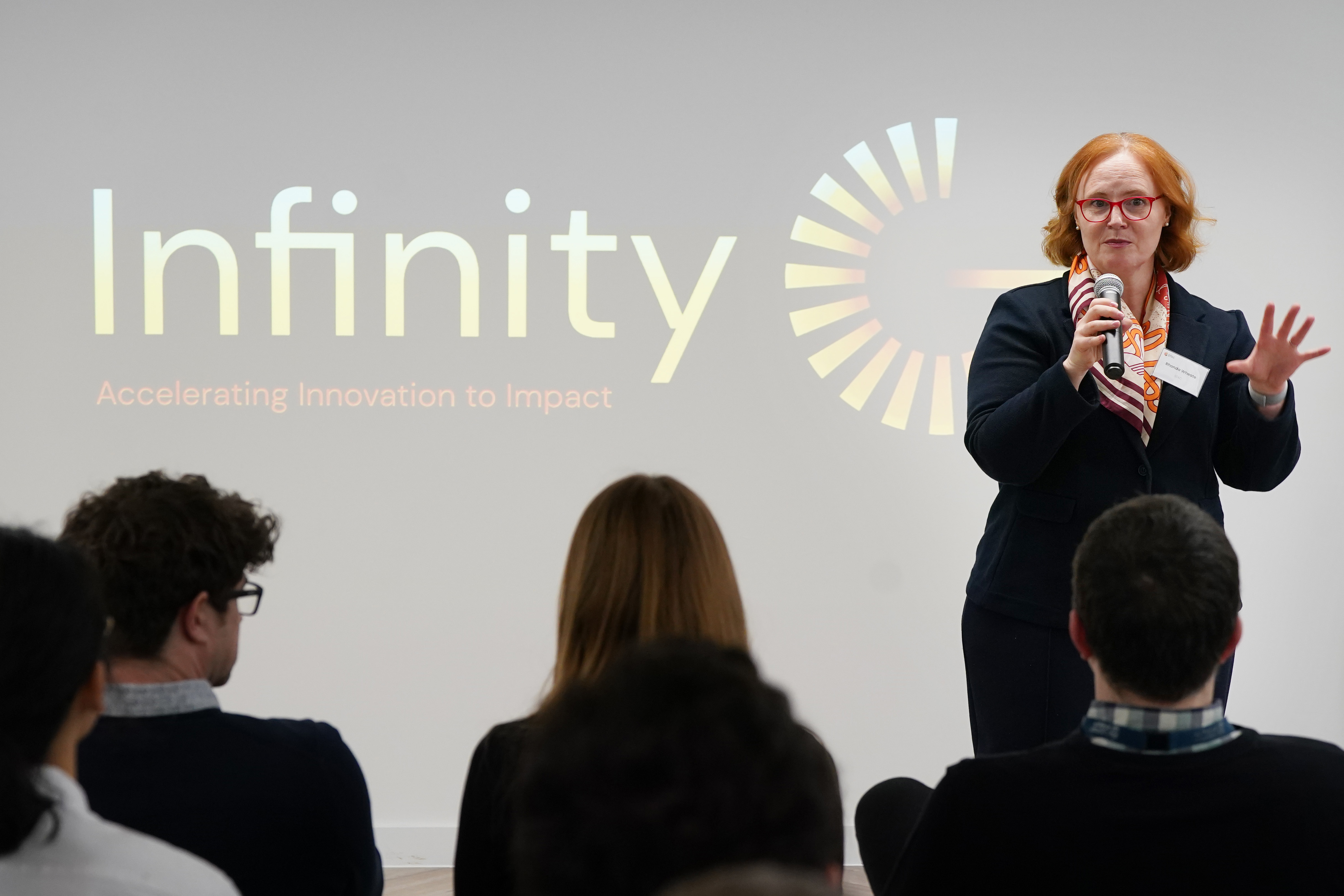
The full cohort were: Brain Dynamics; FlashSens; HELM; TileBio; Museums in the Metaverse; Kelvin Quantum; Bina Networks; AI Stat; Authrive; Lotus DX; Quantatrac; Radana; Theo Health; and VascuX.
The creation of spin-out companies is at the heart of the University’s Innovation Strategy (2022-25).
In 2024, the University’s top six spin-outs raised investment of more than £60 million, creating 250 jobs across a range of commercial and spin-out activity, and awarded more than £600,000 to 23 projects with commercial or spin-out potential as part of major funding drives in Medtech and the Arts and Humanities.
The University is also working with its partners Scottish Enterprise and Glasgow City Council to deliver jobs, training opportunities and economic growth through Glasgow Riverside Innovation District.
Back to