The Echo of Discovery
Chapter One
How can sound reveal what our eyes cannot?
Film 1: The Echo of Discovery
Duration: approximately 3-4 minutes
This opening film introduces visitors to the central idea behind ultrasound. It explores how humans have long used echoes to understand the world around them, from bats navigating in darkness to ships using sonar beneath the sea. The film introduces the pioneering work of Professor Ian Donald and engineer Tom Brown, setting the scene for the remarkable collaboration that began in Glasgow during the 1950s.
Seeing with Sound
Close your eyes for a moment.
Imagine standing beside a cliff and shouting.
A second later your voice returns.
An echo.
That simple idea, sound travelling outwards before bouncing back, has helped people understand places they cannot see for thousands of years.
Long before ultrasound entered hospitals, echoes were already helping sailors navigate the oceans and engineers inspect enormous steel ships. By measuring how sound returned after striking an object, they could discover what lay beneath the surface without taking anything apart.

What if the same principle could be used to look safely inside the human body?
That simple question would eventually change medicine forever.
Did You Know?
Unlike X-rays, ultrasound uses sound waves rather than radiation. This makes it a safe imaging technique for pregnancy and many other medical examinations.
Meet the Pioneers
During the 1950s, Professor Ian Donald was searching for a safer way to care for pregnant women.
At the time, doctors had very few ways to understand what was happening inside the womb. X-rays could reveal some information but carried risks, particularly during pregnancy.
Donald believed there had to be another way.
Just a few miles away, in the shipyards of Govan, engineers were already using sound to solve a very different problem. Ultrasonic flaw detectors allowed them to inspect thick steel plates for hidden cracks without cutting into the metal.
Among those engineers was Tom Brown.
When Donald and Brown met, they brought together two completely different worlds.
- Medicine.
- Engineering.
- Hospitals.
- Shipyards.
Together they asked a question no one had answered before.
Could sound reveal the hidden structures inside the human body?
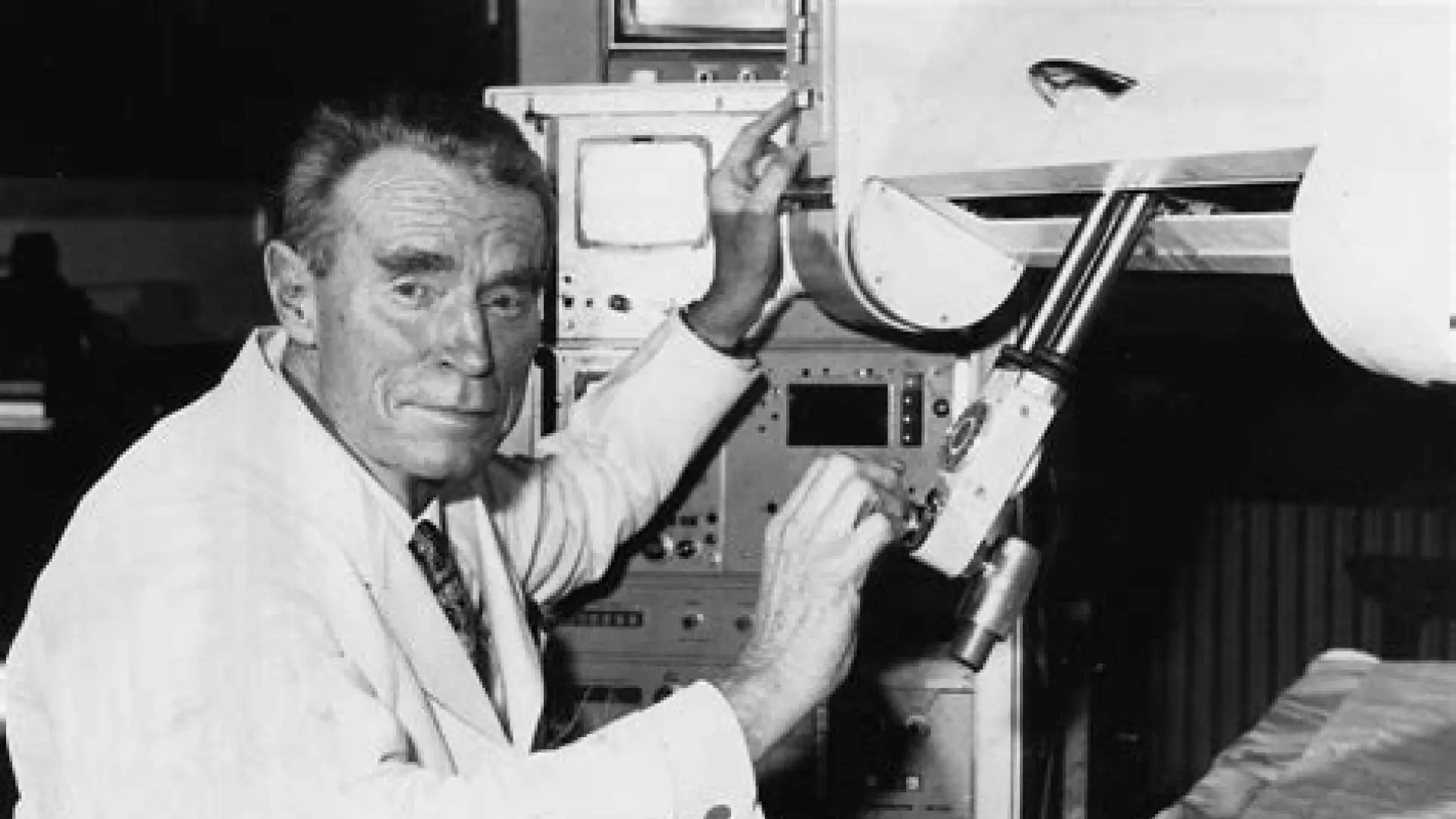
Image of Professor Ian Donald and First Scanner
Metal Flaw Detector Simulator
Learning Goal
Discover how engineers used ultrasonic sound waves to detect hidden cracks inside steel without cutting it open, and explore the scientific principle that would later inspire medical ultrasound.
Before You Begin
Before ultrasound transformed healthcare, it was helping to build safer ships.
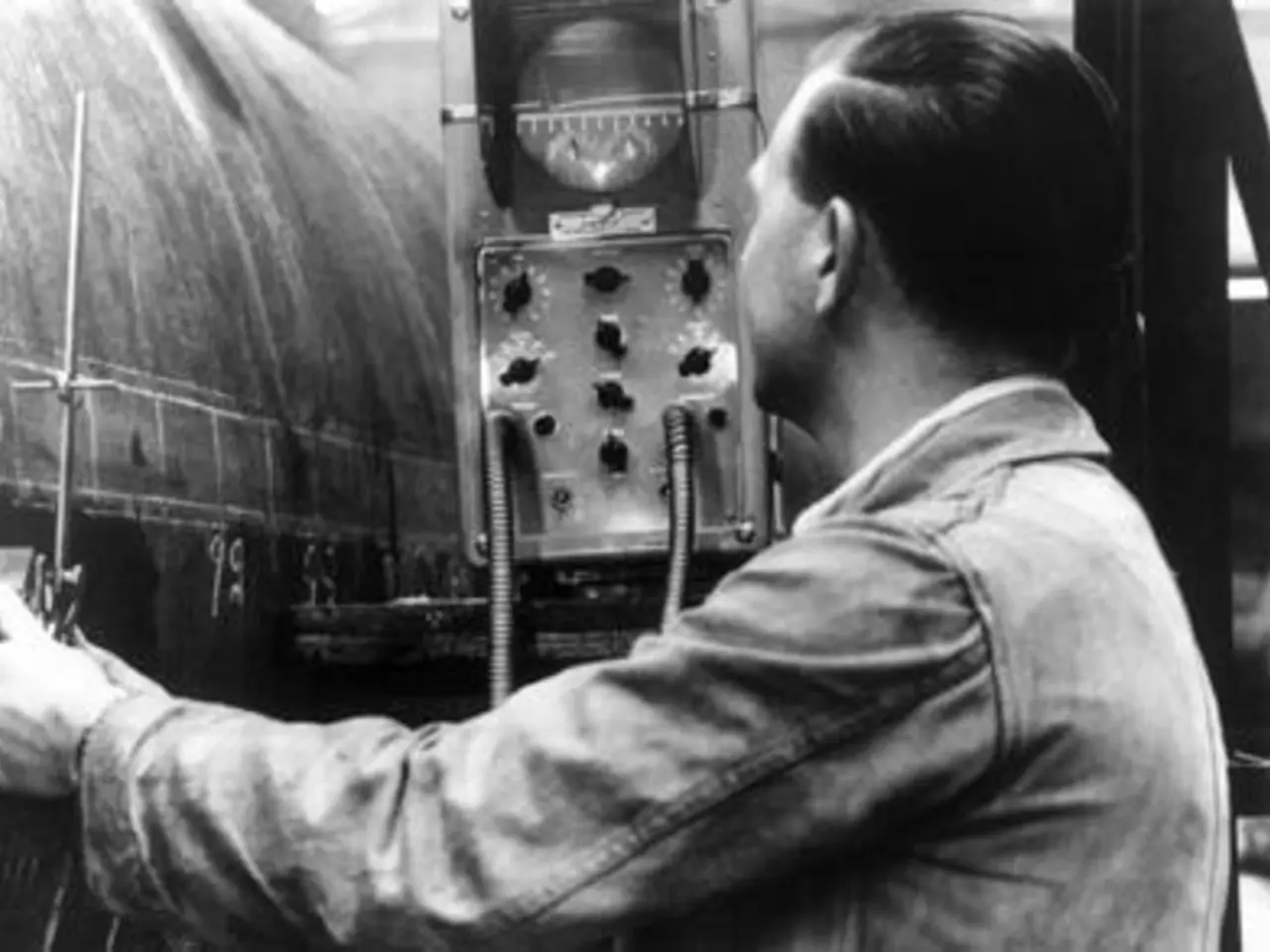
In the shipyards of Govan, engineers used ultrasonic flaw detectors to inspect steel plates for hidden cracks and weaknesses. By sending sound waves into the metal and measuring the returning echoes, they could reveal problems that were invisible from the surface.
This process helped ensure ships were strong enough to withstand the harsh conditions at sea.
Now it's your turn.
Using the ultrasonic flaw detector, scan the steel plate and see if you can locate every hidden flaw. Watch carefully how the returning echoes change as your probe passes over a crack.
As you play, think about this question:
If sound can reveal what is hidden inside solid steel, what else might it help us see?
What Have You Discovered?
Every crack you found was hidden beneath the surface.
You couldn't see it with your eyes, but you could detect it because sound waves travelled through the steel, bounced off the hidden flaw and returned to the detector.
By interpreting those echoes, engineers built a picture of what was happening inside the metal without causing any damage.
This technique became known as ultrasonic testing.
During the 1950s, Professor Ian Donald wondered whether the same scientific principle could be used for something entirely different.
Instead of looking inside steel...
Could sound help doctors look safely inside the human body?
That question would lead to one of the greatest medical breakthroughs of the twentieth century.
Think Like an Engineer
Finding hidden flaws requires more than technology.What skills did you use during the activity?
- Careful observation
- Patience
- Problem-solving
- Attention to detail
- Interpreting evidence
These are the same skills that engineers, scientists and healthcare professionals use every day to solve complex problems.
Continue to Chapter Two